
The Trader's Gift Guide — What They'll Actually Use (And What's Pointless)
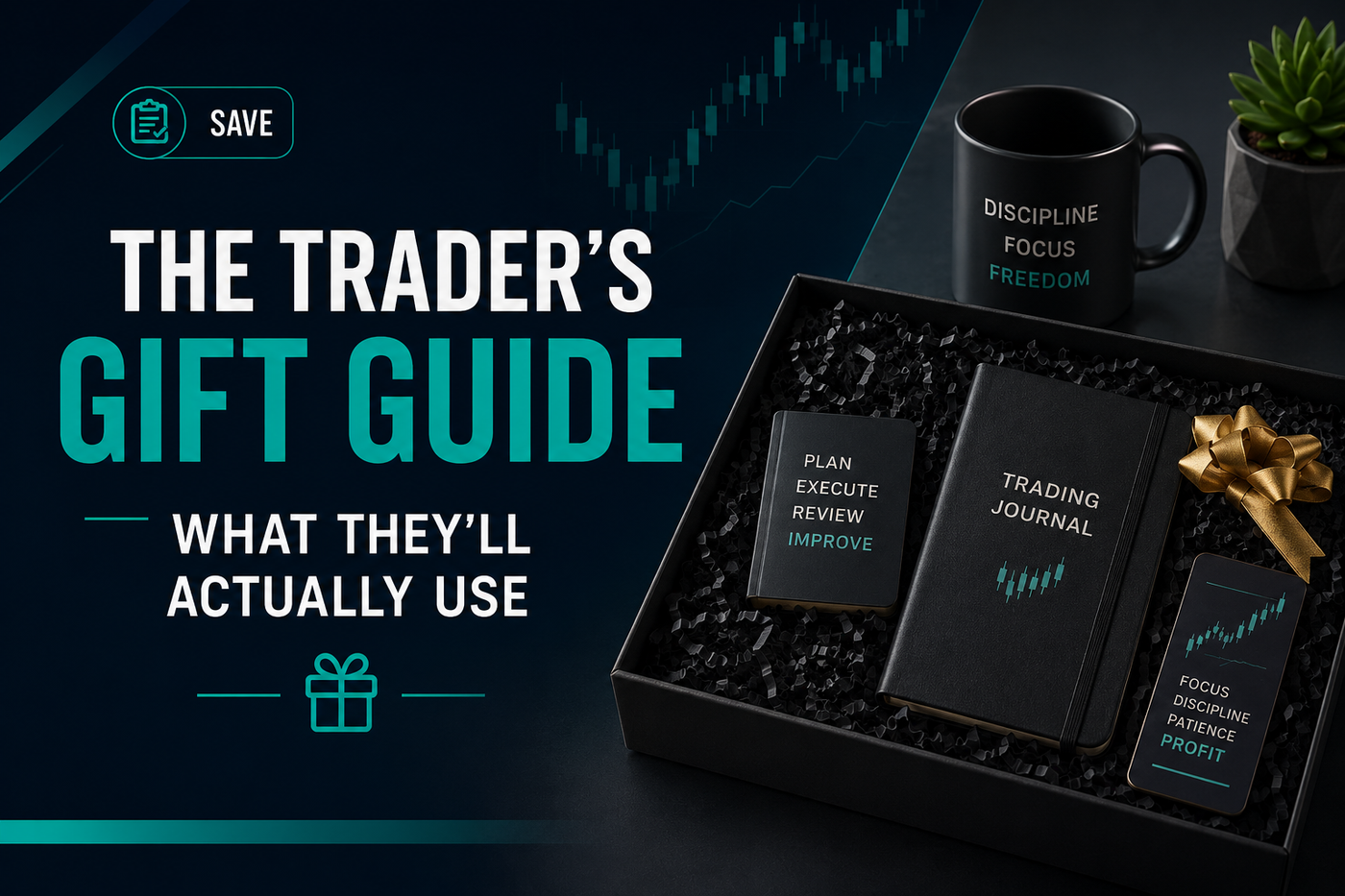
If you've ever searched "gifts for traders" you'll have seen the same results. A mug with a candlestick chart on it. A t-shirt that says "Buy the Dip." Maybe a framed print of the NYSE floor from 1987 for some reason?
Most of it is novelty stuff bought by people who don't trade, for people who do. It looks the part but adds nothing to the actual job of sitting down every morning and making good decisions under pressure.
So here's a more honest breakdown from a trader.
The desk setup stuff — worth it if you get it right
A decent monitor arm, a decent widescreen (this is a must for TradingView), or a proper chair. A trader who spends four hours a day staring at charts in bad posture is a trader who makes worse decisions by session three.
I have the 49" monitor stacked above another and the best trading decision I ever made. Hopefully my wife finds this blog and buys me the chair next :)
The mug question
Here's the thing about trader mugs — most of them are awful. Clip art candlesticks, generic "stonks" jokes, the kind of thing that gets used once and lives at the back of the cupboard.
But a mug is actually one of the most-used items on a trader's desk. Coffee before the open, tea during the London session, something to stare into after a bad trade. If you're going to buy one, buy one that actually looks good sitting next to a chart setup rather than something that looks like it was designed in ten minutes.
Our trading-themed mugs are built for that — proper design, trading-relevant, the kind of thing that ends up as the permanent desk mug rather than the novelty drawer mug. Small distinction, but it matters when someone's looking at it every morning.
Books — the right ones, not the obvious ones
Trading books are a minefield. Half of them are repackaged motivational content with a chart on the cover. The genuinely useful ones tend to be the ones that make traders uncomfortable — books about psychology, about decision-making under uncertainty, about how the brain manufactures confidence when it shouldn't.
Here is my short list of favourite trading books that I personally own:
Best Loser Wins - Tom Hougaard
The Disciplined Trader + Trading in the Zone by Mark Douglas
Trading Psychology 2.0: From Best Practices to Best Processes
Charting tools and subscriptions
TradingView Premium subscriptions make a genuinely good gift because they're the kind of thing traders use every single day but rarely buy themselves when they're already covering data feeds, platform fees, and the psychological cost of last week's drawdown.
The thing that actually compounds over time
Here's where most gift guides don't go, because it's not glamorous enough to write about. We think it is because funnily enough we make a lovely journal ;)
A physical trading journal.
Not an app. Not a spreadsheet template someone downloaded once. A proper, structured, physical journal that sits on the desk and gets opened before every session.
The reason this matters more than any of the above is that journalling is the only habit in trading that directly feeds improvement. A better monitor doesn't make you more disciplined. A book might, eventually. But writing down your plan before you trade, and then reviewing what actually happened — that's the loop that separates traders who get better from traders who just get more experienced at making the same mistakes.
The DMC Trading Journal is A3, spiral-bound, built around a structured format that covers pre-session planning, trade logging, and post-session review. It's not a notebook with lines in it. It's a system.
If the trader in your life doesn't already have one — or is currently using a notes app, a random notepad, or nothing at all — this is the one gift that's still working six months from now.
Want this read on your own chart?
Wave Rider marks the structure, the EMA stack and the levels automatically — live, on any market you trade.
See Wave Rider → Or start with the free onesCharting and analysis only — nothing here is financial advice. Trading involves substantial risk of loss.